




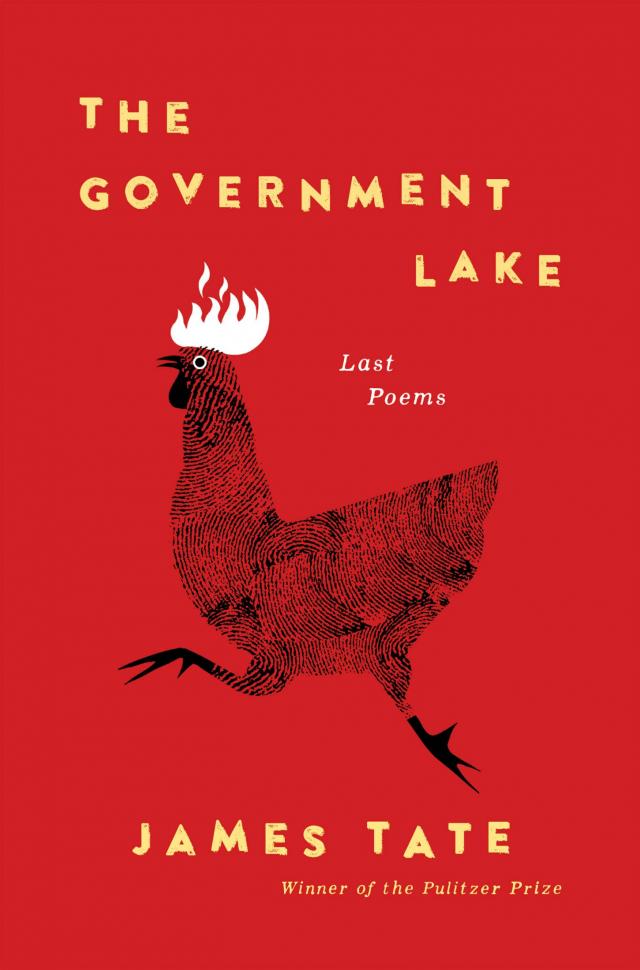
The Government Lake
James Tate
James Tate
The stunning, startling collection that is also the last work from a major poet A woman named Mildred starts laying eggs after feathers from wild poultry begin coming down the chimney. A man becomes friends with a bank robber who abducts him and eventually rues his captor's death. A baby is born transparent. James Tate's work, filled with unexpected turns and deadpan exaggeration, "fanciful and grave, mundane and transcendent," (New York Times) has been among the most defining and significant of our time. In his last collection before his death in 2015, Tate's dark yet whimsical humor, his emotional acuity, and his keen ear for the absurd are on full display in prose poems that finely constructed and lyrical, surrealistic and provocative. With The Government Lake, James Tate reminds us why he is one of the great poets of our age and one of the true masters of the form.
Read online




Dreams of a Robot Dancing Bee
James Tate
James Tate
“Fiction lovers who come to this book with an open mind will find themselves challenged and entertained by a brilliant writer with a very fertile imagination.”—Publishers Weekly (starred review)"When he turns to prose, this Pulitzer Prize-winning poet exhibits a surprisingly uncomplicated style."—DetailsJames Tate seems both awed and bemused by small-town life in these forty-four stories full of legends, flights of fancy, tragedies, and small ruptures in ordinary existence. His narrators speak in an idiom that is odd and completely American.James Tate is the author of fourteen books of poetry and the recipient of numerous awards: fellowships from the NEA and Guggenheim foundations, the National Book Award, and the Pulitzer Prize.From Publishers WeeklyTate brings a poet's touch to the short stories in this astounding and bizarre collection, reflecting the writer's flair for black humor and absurdity as he explores the nooks and crannies of ordinary life. Tate is a blunt, sharp narrator who takes his stories in unexpected directions, and his talent for brevity surfaces in the many short-short entries that pack a powerful conceptual wallop in just a few pages. The longer stories aren't always as effective, but they still showcase the gifts of a remarkably versatile author who handles subjects ranging from politics and business to romance, marriage and infidelity. The political angle surfaces in "Traces of Plague Found Near Reagan Ranch," a cheeky tale about a prominent politician's son who finds himself longing for a simple life until his father is shot. Tate also plays the relationship card with aplomb in several stories, including "The Torque-Master of Advanced Video," a yarn about a video store manager whose romance begins to go sour when his tyrannical boss turns up the heat on him at work. Occasionally the stories are so strange that they simply defy categorization "Beep," for instance, deals with a character who barks out strange noises in inappropriate situations, while the title story is a brief poetic musing about a middle-class man's growing sense of alienation: "I am an experiment, a mechanical bee placed near the hive." Tate's style is definitely an acquired taste, but fiction lovers who come to this book with an open mind will find themselves challenged and entertained by a brilliant writer with a very fertile imagination. (Dec. 1)Forecast: Tate has won both the Pulitzer Prize and the National Book Award for his poetry, which will help draw attention to this excellent small press offering. Copyright 2001 Cahners Business Information, Inc.From The New YorkerLike forty-four test tubes, these stories contain a series of meticulously prepared chemistry experiments. In most, two disparate characters result in a highly unstable compound, producing a fizz, a moral insight, and a sense of personality as destiny. A wife realizes that her husband is crazy. A husband realizes that his wife is crazy. A closet boxing fanatic decides to run off to Egypt with a sexy young boxing fanatic. Whatever the dysfunction, Tate, the long-acclaimed poet, uses a disarmingly pedestrian voice to lure the reader to a place of bizarre poignancy. He makes eccentricity look good, as a poet should. Copyright © 2005 The New Yorker
Read online