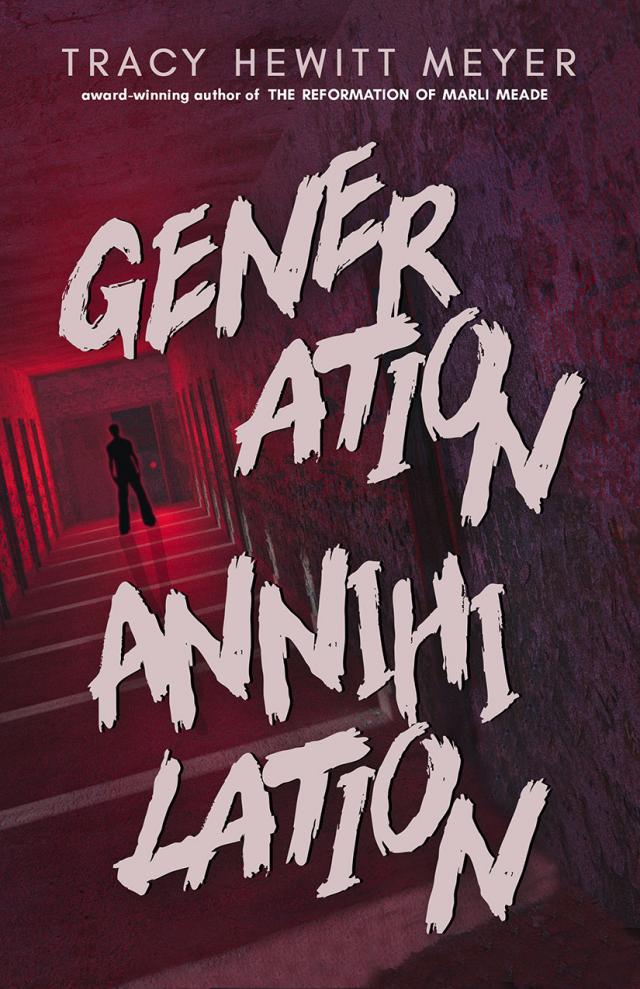
Generation annihilation, p.1
Generation Annihilation, page 1


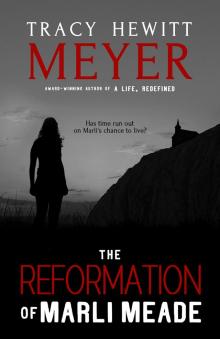
The Reformation of Marli Meade
The Rowan Slone Novels
A Life, Redefined
A Life, Forward
A Life, Freed
Quotation from Edgar Allan Poe. Public domain.
Quotation from artist Kyle Wilson appears in his blog “Trans-Allegheny Lunatic Asylum.” April 20, 2020. Copyrighted Kyle Wilson ©2020. Reprinted by permission of artist. All rights reserved.
GENERATION ANNIHILATION
Copyright ©2023 Tracy Hewitt Meyer
All rights reserved. No part of this publication may be reproduced, distributed, or transmitted in any form or by any means, including photocopying, recording, or other electronic or mechanical methods, without the prior written permission of the publisher, except in the case of brief quotations embodied in critical reviews and certain other noncommercial uses permitted by copyright law. For permission requests, please write to the publisher.
This book is a work of fiction. The characters, incidents, and dialogue are drawn from the author’s imagination and are not to be construed as real. Any resemblance to actual events or persons, living or dead, is entirely coincidental.
Published by BHC Press
Library of Congress Control Number:
2022941258
ISBN: 978-1-64397-355-5 (Hardcover)
ISBN: 978-1-64397-356-2 (Softcover)
ISBN: 978-1-64397-357-9 (Ebook)
For information, write:
BHC Press
885 Penniman #5505
Plymouth, MI 48170
Visit the publisher:
www.bhcpress.com
For Chase
“I became insane, with
long intervals of horrible sanity.”
— Edgar Allen Poe —
“Throughout this whole asylum
was a vast feeling of loneliness.
It was actually more than that…
it was where desolation goes to be alone.”
— Kyle Wilson —
My small, run-down house sits like a sore on the outskirts of Baltimore at the end of a festering block of more run-down houses. The chain-link fence is corroded in some parts and bent in others. The gate swings back and forth with the pungent city breeze. Poverty and violence mingle like friends, like foes.
Inside that house rests my stepfather, Rodger. Never friend, always foe.
Inside that growing inferno.
I stare hard at the second floor of the brick home. The windows are starting to turn from grimy and dirty to gray and opaque, courtesy of the increasing level of smoke.
I’m sitting on a bench in a park across the street, sheltered under a huge oak tree. There is a trash can to my left and an asphalt path to my right. It’s dusk out, and the land is cast in shadow—this land of shootings, rapes, and beatings.
Tonight there will be one less beating in this neighborhood of mine.
The smoke is thickest behind the window on the left side of the house where Rodger is. This was strategic on my part. I wanted to eliminate any chance of escape. He’ll be passed out drunk anyway, like he always is…too far into a stupor after his early evening trip to the bar to rescue himself. How could I be so sure he’d be in that same stupor on this particular day? This, the most important of all important days? Because I stood in the doorway of the bedroom he shared with my mom and listened to the guttural snores of a man far gone into an alcoholic blackhole. I was so familiar with this coma-like sleep, an occurrence that happened nearly every evening if he wasn’t on duty, that I knew I could carry out my self-imposed mission without fear of interruption.
As flames march through the house, window by window and room by room, I stand. The smell from the trash can beside me is no match for the smell of my home’s slow burn. I hitch my bag over my shoulder and walk the three blocks to where my old truck is parked. I hop inside and force myself to drive the speed limit out of Baltimore. The sky slowly turns from pink to gray to black in my rearview mirror. I’m heading to rural West Virginia where I pray the mountains will swallow me alive, hiding any hint of my existence.
My truck is as quiet as a morgue and as dark as a coffin, lid closed, locked, sealed. No city lights brighten the sky; they have been gone for what feels like forever. Even the stars and moon are hiding. Light rain peppers my windshield, making visibility even more elusive. Panic pushes against my brain just as the mountains, caught in the flash of my headlights, push against both sides of the road. I feel like I’m driving through a tunnel rather than along an open-aired interstate.
Sometime after midnight, I pass under the only road sign I’ve seen in an hour. My headlights illuminate the words:
Welcome to West Virginia
Where the Wild Is Wonderful
and the Wonders Are Wild
It feels wild. Will it be wonderful?
When my cell phone rings, I jump like I’ve been tased. I slap the passenger seat, snatching it up on the fourth ring and hitting the answer button before I realize it might be the police.
I don’t want to talk to the police.
“Yeah?” I deepen my voice when I answer and clear my throat. The tires on the right side of my truck suddenly start eating gravel, so I yank the wheel to the left.
“Shaun?”
I sigh. “Hi, Mom.”
“Are you okay?”
“Fine.”
“You almost there?”
“Just passed into the state.” I shove my foot down on the gas and try not to yawn. The energy drink and two cups of coffee I downed aren’t doing their job. “What’s up?”
“The doctor says I might be able to go home by the end of the week.”
“That’s too soon.”
“I only have a few cracked ribs and a bruised kidney.”
“And a busted lip, a black eye, and a broken wrist.”
“And a concussion.” Those last words come out in a whisper, as if she can’t commit herself to them. But this isn’t the first concussion Rodger has given her.
I grip the steering wheel tighter as the image of her beaten, bloodied, half-dead body pops into my mind. It is not the way a son should find his mom when he comes home from school, as I did yesterday. By the time I walked through the front door, Rodger had already left the house and was likely far into his whiskey down at the bar. That gave me enough time to call 911, go with Mom to the hospital, and return home to carry out my mission with laser focus.
“I’ll heal. I always do,” she says.
When I don’t answer, she steers the plummeting-to-hell-in-a-handbasket conversation into safer territory. “Do you need to stop? Get coffee? Maybe some gum. Chewing gum might help you stay awake. Especially mint flavor.”
“I’m good, but I’m gonna hop off the phone and put on some music. I’ll talk to you tomorrow.”
Instead of goodbye, she starts to cry—wail, even.
My mom is the person everyone should want at their funerals. She would send the dearly departed off with one hell of a show.
“Don’t cry, Mom. No one will look for me in West Virginia. You did a good job pretending you weren’t from some rural holler. I doubt anyone could trace your roots to there, much less to your dad’s—”
“Grandpa’s.”
“Grandpa’s, but that doesn’t really fit since I didn’t know him. Anyway, no one knew about the cabin, did they?”
“Rodger does.”
“Well, he’s not around to tell anyone.”
“Shaun!” she hisses. “What are you saying?”
“You know what I’m saying. You knew what I was going to do before I did it. Don’t play naïve.”
“But I never thought…”
“That I’d go through with it?” My question is met with silence. “You knew I would because I’ve tried two other times to get rid of this problem. Now, I’ve finally succeeded.”
“Shaun!”
“Stop. Just stop, Mom.”
In general, I try not to be disrespectful. She’s the only family I have, and she’s suffered enough. But playing dumb at a time like this really pisses me off. She knew what I was planning. She knew I’d bought the gas cans. And she knew when I’d reassured her during my visit to her hospital room last night that I had every intention of going through with it. She’d been the one to suggest I flee Baltimore and go to her father’s remote cabin in West Virginia after the deed was done. No matter what her guilty conscience was telling her now, she knew what I was going to do, and she can’t hide from the fact that I did it.
Neither of us speaks for several black moments. The darkness inside and outside of the truck seems to merge into the bleakness of this conversation.
“I’m not so sure about this anymore,” she says.
“Not so sure about what anymore?”
The sounds of a shared hospital room play in the background: random beeps, hushed voices, and a television. “Not sure about what?”
“Come back to Baltimore. It’ll make you look less guilty. You do have a past.”
“What the hell, Mom.”
“Language.” She is not committed to her rebuke. She never has been. “Did you remember your lithium?”
“Of course.” Did I? I go down a mental checklist. “Are you taking yours?” I ask pointedly.
“Yes, they’re giving it to me here. Shaun—”
“Stop. Seriously, stop. I’m going to West Virginia. I have the key to the cabin here in my nifty little pocket. I’ll let myself in, hunker down—I have a bag full of food and a jug f
“Yes, but…” She sighs, the sound filled with drama. “Okay. Go to Grandpa’s.”
“I am.”
“Just…”
“Just what?”
“Just be careful.”
“I’ll only venture out if I need to go to the store.”
“If you do, head straight home when you’re done.”
“I bought a box of hair dye the last time I stopped. Even if they come looking for me, they’ll find a kid with brown hair, not red.”
“I think you’ll need more than that to keep you safe,” she whispers.
An unexplainable chill creeps over my skin despite my heated truck. “Why would you say that?”
My headlights catch the huge, iridescent eyes of a deer in the middle of the road. I slam on the brakes and yank the wheel. The tires screech as they skid, fighting for traction. The rear fishtails.
The deer stands paralyzed. A vision of its antlers piercing the windshield flashes before me. Just before I slam into its body, the truck slides off the road and comes to a stop in a shallow ditch.
The deer stays on the road a second longer then flees into the forest.
My hands shake, and I inhale and exhale several times.
“Shaun? Shaun! What’s going on?”
I wrap calmness around me like a cloak. “Nothing.”
“Are you sure?”
“Yes.” I pray the truck isn’t stuck. Fear freezes my resolve for a moment. I use the breathing technique I learned during my forced therapy sessions in juvie, and I am surprised when I feel the panic start to lessen. I push the gas pedal and am relieved when the tires catch and the truck moves forward.
A beep in the background is the only sound that indicates Mom is still on the other end.
“Mom, say something.”
I hear her take a shaky breath. “I’m scared.”
“There is nothing left to be scared of.”
I hear more beeping, doors closing, and someone talking in the background.
A woman’s voice rises over the noise. “I need to check your vitals, Mrs. Treadway.”
“Honey, I have to go. Please be careful.”
“I know, okay?”
“But your past,” she whispers into the phone. “You’re in the system.” She doesn’t have to clarify that the system she’s referring to is the one that sent me straight to a juvenile detention center without passing Go when I was twelve.
“Why are you bringing that up?” I demand.
“Just…they’re probably already looking for you.”
“I have to go.”
A pause before she says, “I love you.” Another pause, then a whispered warning, “Be careful.”
“Mom—”
The line goes dead.
I hurl the phone onto the passenger seat.
What does my past have to do with my present or my future? I can see her argument if I’d stayed in Baltimore. I have little doubt Rodger’s cop friends will put two and two together, especially with my past attempts on his life. That’s what happens when you kill an officer—the other officers go out for blood. But in West Virginia where no one knows me? Where there is a little isolated cabin to hunker down in while I wait the storm out? Hell, I might even like it and not want to leave. Maybe I’ll become a modern-day wanderer like that guy who went to Alaska and got lost in the wild, though preferably without the dying part.
Irritated and unsettled, I crank up some early ‘90s heavy metal loud enough to drown my thoughts. I check the speedometer and slow down. Getting pulled over for speeding is the last thing on my agenda tonight. Being in any police presence at this point is like opening a box that needs to stay closed if I am to be free.
I blink and the sky is oily black, a hovering wasteland that threatens to suck out my soul. I blink again and the sky is streaked with splashes of orange and pink over the mountain peaks. The two wheels on the right side of the truck are crunching gravel. With a quick jerk, I’m back on the road, rounding yet another curve in this strangely winding state.
A glance at the clock tells me it’s six o’clock in the morning, the earliest I’ve been up in years. I yawn as if on cue.
There are few road signs along the interstate, which I suppose means there must be few towns. I haven’t passed a fast-food place in forever. It’s a good thing I filled the tank before I dropped into this abyss.
A couple of hours later, and not soon enough, a small road sign finally appears. The next exit—the only exit I’ve seen in miles—will take me to Blackthorn Peak, West Virginia. My destination.
The exit ramp curves so sharply I nearly slide off the road again, but I manage to slam the brakes and slow the tires just enough to maintain traction. Driver’s ed never taught me how to drive in a place like this. With a slow, concentrated exhale, I turn and keep turning until the road finally straightens and I see…nothing.
No streetlights, no buildings, no homes. Only trees and more trees, hiding the mountains beyond and standing against the road like walls. It’s a paved road though—the only indication civilization has passed through at some point. I guess that’s something.
Unease prickles anyway.
This is what you need, Shaun. They will never find you here. Hell, you wouldn’t be able to find yourself here.
I laugh. It’s a slightly manic sound I haven’t heard come from my mouth in months thanks to the little wonder known as lithium.
When I think I must be at the end of the earth, I come to a stop sign. Its red surface is dull and has been defaced with some sort of black graffiti. The words are indecipherable, and there are some strange symbols I don’t recognize. I pull to a stop even though I don’t see another car. Nothing to my right or left, but ahead I see a faint scatter of lights. I drive in that direction.
Please be the town.
It seems it is as I come upon the beginning of a line of buildings. A sign states that I have arrived on Main Street. The street is five or so blocks long, straight and precise, and leads to what looks like a hospital, a government building, or a school. It’s just far enough in the distance that I’m not able to tell what it is. Not to mention Main Street is so narrow, I can’t see much of the building anyway. It looks official though, so I hope there might be a place to get food near there.
I push the gas and start through this tunnel-like town.
Each building is built of drab brick, some with awnings and some with flat facades. Some have glass doors and wide windows, while others have solid doors and smaller windows. All of the buildings look like they are frozen in the 1950s, and they all are dark inside.
There are no other cars on the road. No people on the sidewalks. The roads are dusted with dead leaves and tree limbs as if a storm had come through recently. I stop at each stop sign, but there is no need. I’m the only human being here.
The town of Blackthorn Peak is quieter than my third period English class when the teacher asks about a book no one read. There are no frumpy housewives pushing strollers. No overeager businessmen acting like they have somewhere important to be. No ambitious and neurotic college girls running along the sidewalks desperate to be a little thinner. Baltimore would be hopping at this hour when work and school days start.
Ahead is the hospital-looking building. That is where the lights I noticed a few minutes ago are coming from.
I drive forward, ignoring Mom’s directions to the cabin.
No harm in a little exploration.
I turn off my music and roll down my window.
Halfway there, I see a battered wooden sign staked into a small patch of earth below a stop sign. It reads Lunatic Asylum Ahead.
Lunatic asylum?
I stare at the building, though it’s only slightly more exposed the closer I get.
Did they even have lunatic asylums anymore?
I continue ahead as the sign suggests. As I come to a stop at the final sign, the full expanse of the building hits my vision like a sucker punch.
It’s an apparition—sprawled across the ground like a resting dragon.
The road ends in front of the asylum, I can either turn left, right, or go straight onto the grounds.