





The Square Up
Stephen Brown
Plays / Theatre
A gripping police procedural that tracks the investigation of a serial killer with a grudge against society. Another great instalment in sj brown's TasNoir 'whydunnit' series.Detective Inspector John Mahoney and his investigators in the Homicide Squad are faced with a murderer intent on squaring up with his victims in a highly idiosyncratic manner. Faced with theatrically staged crime scenes Mahoney must harness the insights of a renowned behavioural psycholgist as well as utilising the skills of the Forensic Services Squad to track and attempt to comprehend the mindset of the perpetrator. Mahoney is in a race against time to apprehend a murderous foe...and to save one of his own.'sj brown's Mahoney series is a nugget of Tasmanian gold - tautly plotted with forensic detail - DI Mahoney himself is refreshingly realistic and down-to-earth, easy to spend time with.'Alan Carter-Ned Kelly and Ngaio Marsh Award Winner
Read online
King Henry IV Part 2
William Shakespeare
Theatre / Classics / Poetry
More troubled and troubling than King Henry IV Part 1, the play continues the story of King Henry's decline and Hal's reform. Though Part 2 echoes the structure of the earlier play, it is a darker and more unsettling world, in which even Falstaff's revelry is more tired and cynical, and the once-merry Hal sloughs off his tavern companions to become King Henry V. James C. Bulman's authoritative edition provides a wealth of incisive commentary on this complex history play.
Read online
King Edward III
William Shakespeare
Theatre / Classics / Poetry
King Edward III is increasingly thought to have been written in significant part by Shakespeare. This landmark new edition by textual expert and General Editor of the Arden Shakespeare, Richard Proudfoot, offers a full account of the play's text and the evidence of Shakespeare's hand at work in it. Fully annotated with on-page notes and a lengthy critical introduction which also explores the play's production history and the impact of its historical context.
Read online

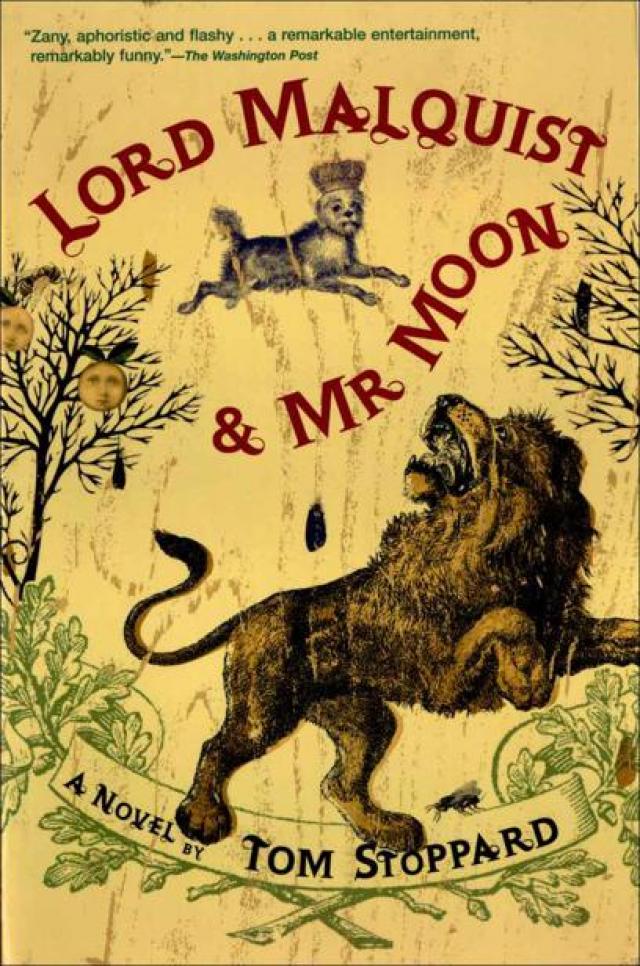
Lord Malquist & Mr. Moon: A Novel
Tom Stoppard
Theatre
Review
“A beautiful, funny novel.” –New Republic.“Clever, amusing,
diverting…” –New York Times“Zany, aphoristic and flashy… a remarkable
entertainment, remarkably funny.” –Washington Post“This bizarre carnival
of a first novel is written with the same rapier-like wit that distinguishes Mr.
Stoppard’s hit play Rosencrantz and Guildenstern Are Dead…” –Publishers
Weekly“The pace of the romp never slackens, and the fusillade of puns,
travesty, parody, double entendres is rapid… Stoppard’s talent as an entertainer
is certain and brilliant.” –Vogue Magazine
Product Description
Tom Stoppard’s first novel, originally published in 1966 just before the
premiere of Rosencrantz and Guildenstern Are Dead, is an uproarious fantasy set
in modern London. The cast includes a penniless, dandified Malquist with a
liveried coach; Malquist’s Boswellian biographer, Moon, who frantically
scribbles as a bomb ticks in his pocket; a couple of cowboys, one being named
Jasper Jones; a lion who’s banned from the Ritz; an Irishman on a donkey
claiming to be the Risen Christ; and three irresistible women.
Read online
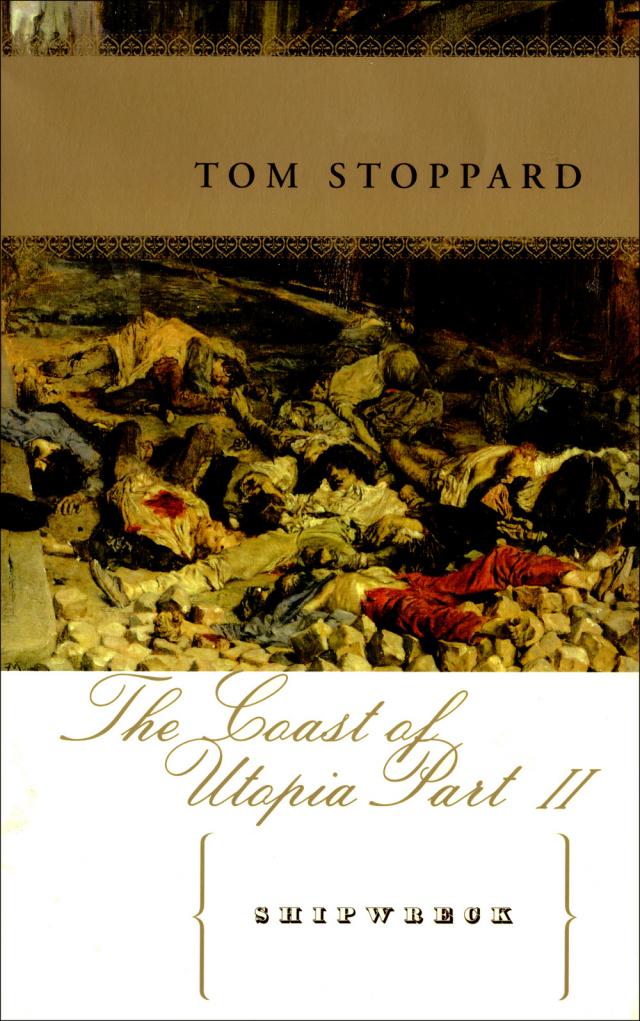
Shipwreck
Tom Stoppard
Theatre
The Coast of Utopia is Tom Stoppard’s long-awaited and monumental trilogy that explores a group of friends who come of age under the Tsarist autocracy of Nicholas I, and for whom the term “intelligentsia” was coined. Among them are the anarchist Michael Bakunin, who was to challenge Marx for the soul of the masses; Ivan Turgenev, author of some of the most enduring works in Russian literature; the brilliant, erratic young critic Vissarion Belinsky; and Alexander Herzen, a nobleman's son and the first self-proclaimed socialist in Russia, who becomes the main focus of this drama of politics, love, loss and betrayal. In The Coast of Utopia, Stoppard presents an inspired examination of the struggle between romantic anarchy, utopian idealism and practical reformation in what The New York Times calls, “The biggest theatrical event of the year. . . . Brilliant, sprawling. . . . A rich pageant.”
Read online
