

The unhappy medium 2 tom.., p.1
The Unhappy Medium 2: Tom Fool: A Supernatural Comedy, page 1


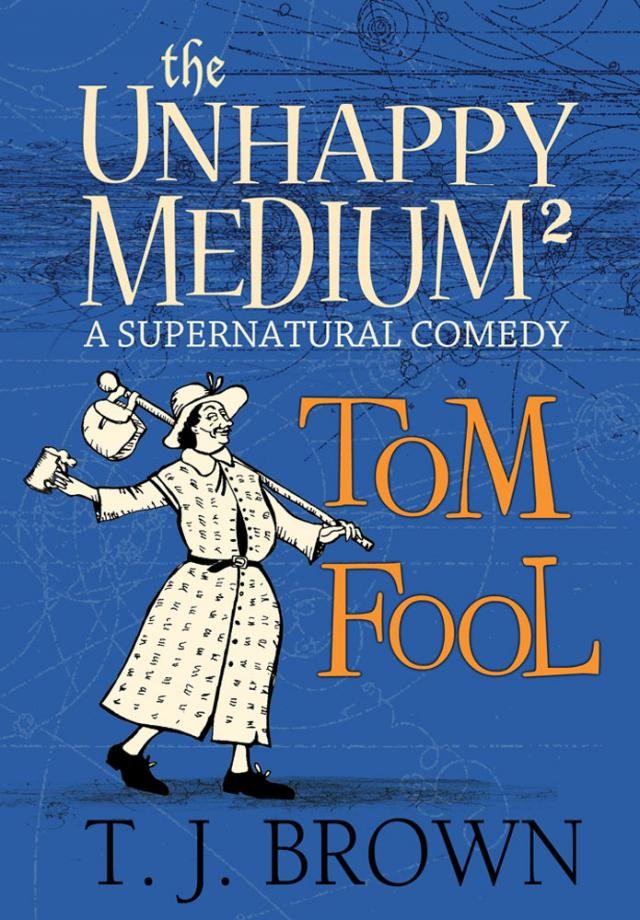
Tom Fool
T. J. Brown
Copyright © T. J. Brown (2017). All rights reserved.
www.theunhappymedium.com
This book is a work of fiction. Any references to real events, people or places are used fictitiously. Other names, characters, places and incidents are products of the author’s imagination. Any resemblance to actual events, places or people, living or dead, is entirely coincidental.
CONTENTS
CHAPTER 1 – RAG
CHAPTER 2 – A DAY IN THE LIFE OF
CHAPTER 3 – GOLF
CHAPTER 4 – TOM THE FOOL
CHAPTER 5 – VICARAGE
CHAPTER 6 – HAIR
CHAPTER 7 – THREESOME
CHAPTER 8 – A DIVISION OF LABOUR
CHAPTER 9 – PENAL ENVY
CHAPTER 10 – A CHANGE IN THE LANDSCAPE
CHAPTER 11 – THE OLD GANG
CHAPTER 12 – A CHANGE OF PLAN
CHAPTER 13 – CHINA SYNDROME
CHAPTER 14 – AMONGST THE DAWSONS
CHAPTER 15 – FREELANCING
CHAPTER 16 – IDENTITY THEFT
CHAPTER 17 – REGULARS
CHAPTER 18 – ACROSS A CROWDED ROOM
CHAPTER 19 – EYES ON THE PRIZE
CHAPTER 20 – DISCRETE
CHAPTER 21 – PRINT
CHAPTER 22 – POLITE SOCIETY
CHAPTER 23 – SUMMARY
CHAPTER 24 – A CROWDED HOUSE
CHAPTER 25 – IT BEGINS
CHAPTER 26 – TICKING AND TALKING
CHAPTER 27 – UNLEASHED
CHAPTER 28 – SLIGHT OF HAND
CHAPTER 29 – WRAPPED
CHAPTER 30 – DRAG
CHAPTER 31 – GROUP THERAPY
CHAPTER 32 – RETURN THE GIFT
CHAPTER 33 – MAKING AN ENTRANCE
CHAPTER 34 – A NEW FRIEND
CHAPTER 35 – GATECRASHING
CHAPTER 36 – BLOOD AND IRON
CHAPTER 37 – MOBILE
CHAPTER 38 – MUNCASTER
CHAPTER 39 – SIEGE
CHAPTER 41 – THE BREACH
CHAPTER 42 – JAM
CHAPTER 43 – A BRIDGE TOO FAR
AUTHOR’S NOTE
ABOUT THE AUTHOR
ACKNOWLEDGEMENTS
For my Father
CHAPTER 1 – RA
G
The prison, like all prisons, was a mix of nauseating smells and distant, angry voices. Oliver Wragg paid them no attention; he merely lay upon his bed and gazed up to the heavens. This was easier for Wragg than the other prisoners because the ceiling above him was, quite literally, the heavens. Or rather, it was a fine approximation of the heavens, painted in true Renaissance style by Wragg’s own hand, with the full endorsement of the prison governor. There were cherubs and angels, nymphs and heralds, all cavorting across the sky as if they were the work of Michelangelo himself.
Wragg’s cell was not at all like the other cells. There was no pornography on the walls, and it was packed to its decorated roof with dazzling art. There were pastels, woodcuts and oil paintings, one of which was in progress upon the easel donated to him recently by the Prison Arts Programme, dedicated as they were to nurturing the creative talents of some of Britain’s most violent offenders. Not that Wragg needed nurturing; he’d been born with the ability, like a fledgling bird that can fly straight from the nest; a blessing, for he was singularly unimpressive in any other respect. Little Oliver was sullen, prone to vicious mood swings and, had it not been for the jaw-dropping quality of his artwork, his long-suffering parents would have gleefully surrendered the child to social services. But once the school began fawning over his unique and unexpected gift, they were stuck with the menacing little cuckoo.
The problem was that Oliver Wragg’s gift seemed to make the more anti-social aspects of his explosive personality impossible to openly acknowledge. If another child was stabbed in the temple with a pencil, it was always Wragg who was seen as the wronged party, even if the traumatised victim required stitches.
The art department at St Winifred’s had fallen over themselves to promote the boy; concerns about violence, psychosis and basic personal hygiene overlooked, as Oliver was cloaked in the all-forgiving mantle of the idiot savant.
In fairness, the art did have to be seen to be believed. It was uncanny, creepy even. Oliver could paint in any style, any medium, almost as if he’d been tutored by the great masters themselves. He only had to see a painting once, and he could replicate it down to the smallest brushstrokes. He could even create new works in the style of anything from the cave paintings of Lascaux to the Cubists and beyond. Scores of child psychologists, art therapists and neurologists came and went. Little Oliver Wragg became a media sensation, exhibited at major galleries, the subject of documentaries and psychology papers.
However, in the Wragg household, things had a different flavour altogether. Far from warming under the spotlight of recognition, he grew cold and sinister. Though slight by most people’s standards, the maturing Oliver towered above his ageing parents, and they began to edge warily away from him as he became increasingly manipulative and mean. Eventually, they felt compelled to seek help from the authorities. But Oliver’s public profile was such that they were sent packing, a rebuke for not supporting such a gifted child buzzing in their ears like a bluebottle.
Upon leaving school with an A in art and flat fails in everything else, Oliver began to dominate the small terraced house. He intimidated his parents into a solitary downstairs room then turned the whole top floor into an artist’s studio.
His poor father now wore a permanent black eye.
But then the media interest began to wane. He’d been big news for years, but as the attention span for any sensation – no matter how sensational – is limited, he began to drift out of the public arena. Not that Oliver knew or cared, for his motivations were simplistic in the extreme. He lived to paint, and that was all.
A year or so after the last newspapers and TV crews had departed, the Wraggs had been visited by a gentleman of an altogether different hue. Mr Turner, a large muscular Cockney with the manner of an East End gangster, had arrived one morning, sitting awkwardly upon the threadbare settee to make the boy an offer. Over tea and cake, Mr Turner had made arrangements to employ young Oliver, commissioning him to produce paintings to order, seemingly for a dizzying fee.
And so it began.
Turner would arrive, leave the canvases and depart, only to return the following week to collect the finished product, wrapped by Oliver in brown paper and string, the paintings unseen by his marginalised parents. As Turner left, he would then hand the boy wads of tens and twenties, which Oliver, unwilling to share, took directly to his room. Oblivious to issues beyond his art, Oliver didn’t seem to care about this money. Instead, as the cash came rolling in, the boy left it lying carelessly around, like litter, just more grubby detritus for his hard-pressed mother to tidy away. But finally, because Turner and his arrangement seemed so ominous, his parents began to fret about what it was their ghastly little offspring had got himself into.
They didn’t have to wait long to find out.
Suddenly, it was all over the papers. Scandal erupted across the art markets as great works, with less than great credentials, began to pop up like magic mushrooms on a Welsh rugby pitch.
Oliver Wragg’s parents put two and two together.
One Sunday afternoon, with Oliver out of the house to buy paint, the parents ventured nervously up to the boy’s studio. Sure enough, there were the canvasses; fake Constables, ersatz Van Goghs and would-be Cézannes, propped up against piles of rubbish, ten-pound notes and dirty china.
When Oliver returned, it didn’t take him long to figure out that his studio had been violated. For once, the little monster did not explode. Instead, Oliver waited quietly for a day, and then, while his poor parents fitfully slept, he injected rat poison into a Dundee cake.
Mr and Mrs Wragg died in agony the following teatime.
Oliver, cut adrift from his former puppet master, hovered angrily at the upstairs window, waiting for new commissions that would never arrive.
What did arrive were the police.
Once again, Oliver Wragg was in the news, the only person available to answer for an episode in which collectors and professionals across the art world had been caught with their trousers round their ankles. With reputations laying in the gutter, there was much baying for blood. However, aside from this solitary psychotic wunderkind and his murdered parents, the police found nothing but dead ends. Turner, the name itself in retrospect a mocking pseudonym to the world he had exploited, vanished. The press, Interpol and the FBI all went hunting, but they found nothing, for Turner had planned his escape route to perfection. His distant intermediaries may have been caught in the net, but the trails went icy cold far from the mastermind himself. The money, estimated at some £70 million, vanished with him.
Oliver Wragg, though he’d been in direct contact with Turner himself, was uncooperative in the extreme. At one stage, the exasperated detectives hit on the idea of employing Oliver as a somewhat over-spec photo-fit artist, but all they got for their trouble was a perfect replica of the Laughing Cavalier.
The subsequent murder trial was a source of frustration for everyone involved. Oliver Wragg’s admittedly diminished responsibility was noticeably at odds with his deeply psychotic personality
Wragg was duly tried and sentenced, but only for the murder of his hapless parents. The art establishment, longing for answers, was left none the wiser to Turner’s real identity, nor his whereabouts.
In time, the story faded from the headlines.
Once incarcerated, the ever-unstable Wragg tumbled downwards from open prison to high-security jail. There were a series of prison stabbings, a strangling, and a fire. Eventually, there were no penal reformists left who could prevent Oliver’s descent into the secure psychiatric prison at Broadmoor where powerful medication would finally curb his violent mood swings.
The drugs did not hamper his flair for the arts, however. Oliver continued to paint on the strict understanding that any errant behaviour would see his materials confiscated. Gradually, Wragg settled into prison life, eyes glazed beneath the benzodiazepines and anger suppressants.
Now, some fourteen years later, the world had all but forgotten Oliver Wragg.
* * * *
An incessant knocking dragged Wragg out of his stupor. He slowly turned his head to face the door where a prison guard was standing, his eyes near hidden beneath the peak of his cap, lip curled.
‘Wragg, wake up! Guvnor wants to see you.’
Without speaking, Wragg raised himself carefully and deliberately from his bunk and stood. He followed the guard out and away along the balcony, their passage past the other cells marked by shouts and insults.
‘There goes Oily Rag ... bloody freak!’
‘That’s it, Mr Guard, sir, take him away, sir. Just don’t bring the wanker back, sir!’
If Wragg noticed, he didn’t show it. Neither did he return the gaze of his fellow inmates as he passed, their eyes regarding him with the usual mix of disgust and wariness. Even in an environment bursting with such extremes of human nature, there was something about Oliver Wragg that just plain unsettled.
They passed through a series of checkpoints until, finally, they arrived at the governor’s office. The guard knocked.
‘Come.’
Wragg and his escort entered the austere office to find the governor watering a fern with a small green watering can.
‘Prisoner you asked to see, sir,’ said the guard, roughly pushing his charge before the desk. ‘Oliver Wragg.’
‘Ah yes, Wragg,’ said the governor, putting down his watering can. ‘Please sit down.’ Wragg remained standing, the merest twitch of a defiant smile flickering at the corners of his mouth.
‘You deaf?’ barked the guard. ‘Sit down!’ Wragg slowly lowered himself onto the chair. The governor sat down at his desk and opened a file.
‘Now then, Wragg,’ he began. ‘You have been with us some fourteen years now, is that correct?’ Oliver looked back sullenly, the grin twitching on and off below his dead eyes.
‘Answer the governor!’ the guard yelled.
‘Fourteen years, five months, twelve days and five hours,’ said Wragg accurately.
‘Quite,’ said the governor. ‘Now, I see that you have maintained a more reasonable demeanour of late. Ever since we agreed on the conditions of your access to art materials in fact. And, since you have been medicated at the higher doses, you have thankfully refrained from injuring any more of your fellow inmates. For that, I suppose, we must be grateful. Even so, I, and many of the other staff, still find your attitude to be somewhat obstructive.‘
‘I don’t want to be here,’ said Wragg, quietly.
‘This is a prison, Wragg. No one wants to be here, me included. But, here we are anyway.‘
‘Yes. Here we are,’ repeated Wragg.
‘Now then,’ said the governor, reading from the file. ‘My personal belief is that this prison, or any prison for that matter, is here solely for the containment, and, if we are very lucky, the reform of its occupants. My belief has always been that we are a world outside of normal society, and, that during the process of correction, there should not be anything in the way of interaction with normal, decent, public life.‘ He paused, a look of distaste floating across his features. ‘Well,’ he continued, ‘it seems that the powers-that-be have a different, more “enlightened” point of view.’ He sighed wearily. ‘This morning, I received a letter from my superiors at the Home Office informing me that I should make you available for ...’ he removed his glasses and rolled his eyes upwards, ‘an arts project.’
‘What kind of arts project?’ asked Wragg.
‘By all accounts, there is to be an exhibition of paintings at the National Portrait Gallery in London.’
‘You want me to do a painting?’
‘No, Wragg, they want to do a portrait … of you.’
‘But, I’m an artist.’
‘Yes, Wragg, but you are also first and foremost a convicted murderer. It seems they wish to have an exhibition, a collection of portraits – of criminals.’
‘I can do a self-portrait. What style would you like? Egon Schiele? Albrecht Dürer, …?’
‘No, Wragg,’ interrupted the governor sternly. ‘They are most explicit. We are to be visited by a portrait painter, and he will then paint you.’
‘What if I say no?’
‘You are indeed free to say no. We cannot force you to do anything outside of the normal prison regime. However, it would certainly appear well upon your record.’
‘Parole?’
‘We both know that the parole board will be looking at your case shortly Wragg, yes.‘
‘And this will help?’
‘It won’t make it worse.’
‘Yes, then. When?’
The governor consulted his printout.
‘Two weeks today. We are to make a room available.’ The governor leant back in his chair and folded his arms. ‘Now Wragg, before I let you go, let me make my views very clear to you. I don’t like this kind of thing. I think it’s opportunistic, attention-seeking nonsense and it doesn’t help me, it doesn’t help criminals like you, and it reeks of the kind of liberal arts crap that has ruined the prison service. I’ll go along with it because I have to. That is the only reason.’
‘Can I go now?’ said Wragg.
* * * *
Two weeks later, Wragg was summoned. Ignoring the usual insults from the cells, he made his way under guard to an old games rooms where a makeshift studio had been made ready. A heavy easel complete with a large blank canvas stood waiting before a solitary wooden chair. Wragg sat.
The artist duly arrived; a serious-looking gentleman in his early fifties, his black clothing ostentatiously stained with paint. He had a windblown, creased face, so typical of middle-aged painters – the sort of effect you can only achieve after long-term exposure to white spirit and rolling tobacco. As he entered the room, he narrowed his eyes, sending his wild eyebrows upwards as he settled his gaze resentfully upon the guard.
‘Stand up for the visitor,’ said Wragg’s escort, slightly unsettled. Wragg, showing no emotion of any kind, stood. Arms flapping, the artist immediately gestured him to sit back down again.
‘No, no, no!’ he said firmly. ‘I cannot work if the subject is under duress. No matter what his status, he must not be anything but natural.’
‘Oh, you don’t want this one to be natural, sir,’ said the guard, mockingly. ‘Unless you want a paintbrush jammed in yer eye.’
‘That is a risk I am at liberty to take,’ declared the artist. ‘Now, if you will please leave us be.’
‘What? Leave you with him? Are you joking?’
‘No, I am not joking. I wish for you to wait outside. You are distracting me.’
‘I’m sorry, I can’t do that, sir,’ replied the guard. ‘Regulations for visitors; there must be a guard present at all times.’
‘This is not a family visit. I am here with the full weight of the Home Office and the Arts Council behind me. Would you like me to take the matter up with your superiors?’
The guard wavered uncomfortably.
‘Er, I tell you what,’ he said, eventually. ‘I’ll wait right outside then. Just on the other side of the glass like. If you have any problems, you know, if the bastard goes for you, just yell. I’ll be right there.’
‘Well, if that is the best that you can do,’ said the painter, with exaggerated weariness. ‘Now, if you will be so kind as to remove yourself, I need to acquaint myself with the subject.’ The artist closed his eyes, took a deep breath, and then placed his paint-saturated fingers upon his temples.






