Plunder and Deceit: Big Government's Exploitation of Young People and the Future

Plunder and Deceit: Big Government's Exploitation of Young People and the Future

Mark R. Levin

Politics / Nonfiction / Philosophy

In each of his astounding #1 New York Times bestsellers, Mark R. Levin’s overlying patriotic mission has been to avert a devastating tragedy: The loss of the greatest republic known to mankind. But who stands to lose the most? In modern America, the civil society is being steadily devoured by a ubiquitous federal government. But as the government grows into an increasingly authoritarian and centralized federal Leviathan, many parents continue to tolerate, if not enthusiastically champion, grievous public policies that threaten their children and successive generations with a grim future at the hands of a brazenly expanding and imploding entitlement state poised to burden them with massive debt, mediocre education, waves of immigration, and a deteriorating national defense. Yet tyranny is not inevitable. In Federalist 51, James Madison explained with cautionary insight the essential balance between the civil society and governmental restraint: “In framing a government which is to be administered by men over men, the great difficulty lies in this: you must first enable the government to control the governed; and in the next place oblige it to control itself.” This essential new book is, against all odds, a likeminded appeal to reason and audacity—one intended for all Americans but particularly the rising generation. Younger people must find the personal strength and will to break through the cycle of statist manipulation, unrelenting emotional overtures, and the pressure of groupthink, which are humbling, dispiriting, and absorbing them; to stand up against the heavy hand of centralized government, which if left unabated will assuredly condemn them to economic and societal calamity. Levin calls for a new civil rights movement, one that will foster liberty and prosperity and cease the exploitation of young people by statist masterminds. He challenges the rising generation of younger Americans to awaken to the cause of their own salvation, asking: will you acquiesce to a government that overwhelmingly acts without constitutional foundation—or will you stand in your own defense so that yours and future generations can live in freedom?
Read online
  • 679
Protagoras and Meno

Protagoras and Meno

Plato

Philosophy / Metaphysics / Ethics

In this new edition, two of Plato's most accessible dialogues explore the question of what exactly makes good people good.This lively and accessible new translation conveys the literary elegance and subtle humor of Plato's original dialoguesIncludes suggestions for further reading, a glossary, and explanatory notesAbout the AuthorPlato (c. 427–347 b.c.) founded the Academy in Athens, the prototype of all Western universities, and wrote more than twenty philosophical dialogues.Adam Beresford teaches philosophy and classics at the University of Massachusetts at Boston.Lesley Brown is Centenary Fellow in Philosophy at Somerville College, Oxford.
Read online
  • 678
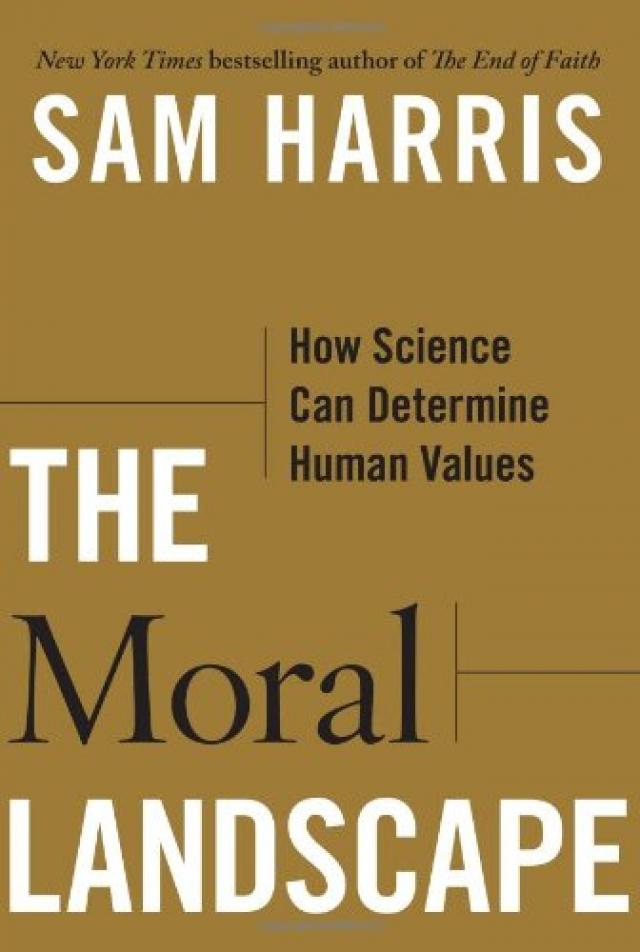
The Moral Landscape: How Science Can Determine Human Values

The Moral Landscape: How Science Can Determine Human Values

Sam Harris

Philosophy / Science / Religion & Spirituality

Sam Harris' first book, The End of Faith, ignited a worldwide debate about the validity of religion. In the aftermath, Harris discovered that most people - from religious fundamentalists to non-believing scientists - agree on one point: science has nothing to say on the subject of human values. Indeed, our failure to address questions of meaning and morality through science has now become the most common justification for religious faith. It is also the primary reason why so many secularists and religious moderates feel obligated to "respect" the hardened superstitions of their more devout neighbors. In this explosive new book, Sam Harris tears down the wall between scientific facts and human values, arguing that most people are simply mistaken about the relationship between morality and the rest of human knowledge. Harris urges us to think about morality in terms of human and animal well-being, viewing the experiences of conscious creatures as peaks and valleys on a "moral landscape." Because there are definite facts to be known about where we fall on this landscape, Harris foresees a time when science will no longer limit itself to merely describing what people do in the name of "morality"; in principle, science should be able to tell us what we ought to do to live the best lives possible. Bringing a fresh perspective to age-old questions of right and wrong and good and evil, Harris demonstrates that we already know enough about the human brain and its relationship to events in the world to say that there are right and wrong answers to the most pressing questions of human life. Because such answers exist, moral relativism is simply false - and comes at increasing cost to humanity. And the intrusions of religion into the sphere of human values can be finally repelled: for just as there is no such thing as Christian physics or Muslim algebra, there can be no Christian or Muslim morality. Using his expertise in philosophy and neuroscience, along with his experience on the front lines of our "culture wars," Harris delivers a game-changing book about the future of science and about the real basis of human cooperation.
Read online
  • 674
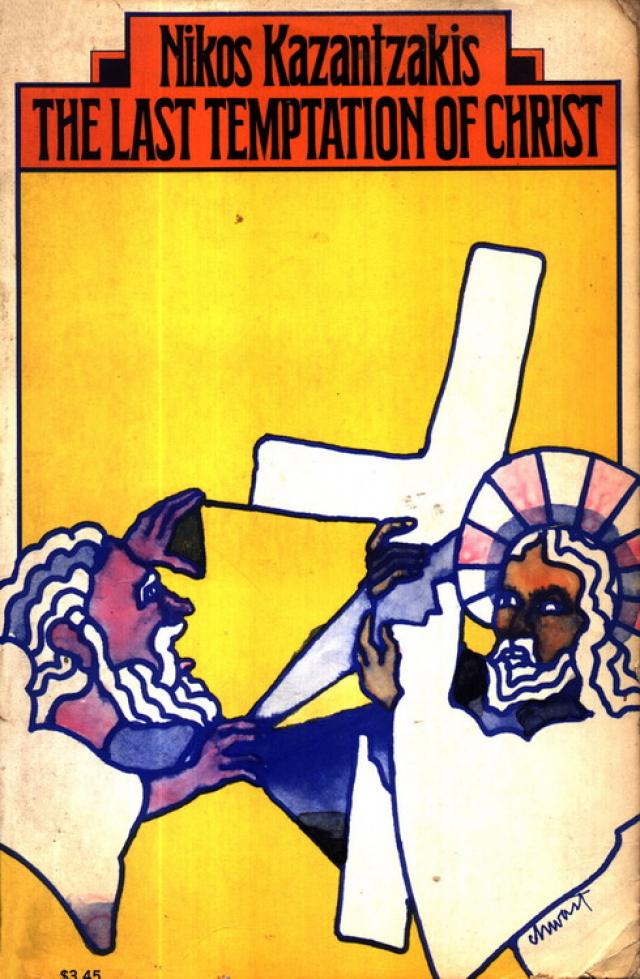
The Last Temptation of Christ

The Last Temptation of Christ

Nikos Kazantzakis

Literature & Fiction / Philosophy

The internationally renowned novel about the life and death of Jesus Christ. Hailed as a masterpiece by critics worldwide, The Last Temptation of Christ is a monumental reinterpretation of the Gospels that brilliantly fleshes out Christ’s Passion. This literary rendering of the life of Jesus Christ has courted controversy since its publication by depicting a Christ far more human than the one seen in the Bible. He is a figure who is gloriously divine but earthy and human, a man like any other—subject to fear, doubt, and pain. In elegant, thoughtful prose Nikos Kazantzakis, one of the greats of modern literature, follows this Jesus as he struggles to live out God’s will for him, powerfully suggesting that it was Christ’s ultimate triumph over his flawed humanity, when he gave up the temptation to run from the cross and willingly laid down his life for mankind, that truly made him the venerable redeemer of men. “Spiritual dynamite.” —San Francisco Chronicle “A searing, soaring, shocking novel.” —*Time *
Read online
  • 674
Letter to a Christian Nation

Letter to a Christian Nation

Sam Harris

Philosophy / Science / Religion & Spirituality

In response to The End of Faith, Sam Harris received thousands of letters from Christians excoriating him for not believing in God. Letter to A Christian Nation is his reply. Using rational argument, Harris offers a measured refutation of the beliefs that form the core of fundamentalist Christianity. In the course of his argument, he addresses current topics ranging from intelligent design and stem-cell research to the connections between religion and violence. In Letter to a Christian Nation, Sam Harris boldly challenges the influence that faith has on public life in our nation.
Read online
  • 671
The Trial of Gilles De Rais

The Trial of Gilles De Rais

Georges Bataille

Literature & Fiction / Philosophy

Georges Bataille presents the case of the most infamous villain of the Middle Ages: Gilles de Rais. Fascinated with the depths of human experience the meeting points of sexuality, violence, ritual, spirituality, and death Bataille examines with dispassionate clarity the legendary crimes, trials and confessions of this grotesque and still-horrifying 15th-century child-murderer, sadist, alchemist, necrophile and practitioner of the Black Arts. Gilles de Rais began his remarkable career as lieutenant to the devout martyr and saint Joan of Arc; after her execution, he fled to his estates in the countryside of France, where he began to ritually slaughter hundreds of children. After his arrest and subsequent trials, he was hanged and burned at Nantes, France on October 25, 1440. The latter section of The Trial of Gilles de Rais consists of the actual ecclesiastical and secular trial transcripts, annotated by Bataille, and translated from the ecclesiastical Latin by Pierre Klossowski."
Read online
  • 668
Trade (A Novelette)

Trade (A Novelette)

Lochlan Bloom

Fiction / Philosophy / Spirituality

The nihilistic employee of a Berlin social network chronicles the early days of a new sexual economy. What happens when the world of tech start-ups collides with the global sex industry?The nihilistic employee of a Berlin social network chronicles the early days of a new sexual economy. What happens when the world of tech start-ups collides with the global sex industry?From the writer described by BBC Writersroom as 'grimly captivating' and 'unsettling and compelling'.
Read online
  • 665
Les Misérables

Les Misérables

Victor Hugo

Literature & Fiction / Poetry / Philosophy

This is a pre-1923 historical reproduction that was curated for quality. Quality assurance was conducted on each of these books in an attempt to remove books with imperfections introduced by the digitization process. Though we have made best efforts - the books may have occasional errors that do not impede the reading experience. We believe this work is culturally important and have elected to bring the book back into print as part of our continuing commitment to the preservation of printed works worldwide.
Read online
  • 663
Fairly Trainee Lesson One: S A & R

Fairly Trainee Lesson One: S A & R

Oliver Davis

Nonfiction / Philosophy / Criticism

the story of two miss match fairies, ones a trainer of new ruff a round the edge fairies wannabes and the other a new t-fairy in training going out for the first time, you see she's supper charged about this night & getting her first tooth and hoping she'll pass this test.Some people struggle with their emotions. They manifest in some raw and powerful ways. I write to deal with mine. From losing a family member and feeling at your lowest to meeting people that make you happy, it is all a step on this road to seeing what sort of person we will be come in the end. You might not agree with me; life is an open book after all, but to those that can relate. Just keep moving forward, things will get better and you will become better as a result.
Read online
  • 661
183