The island, p.1
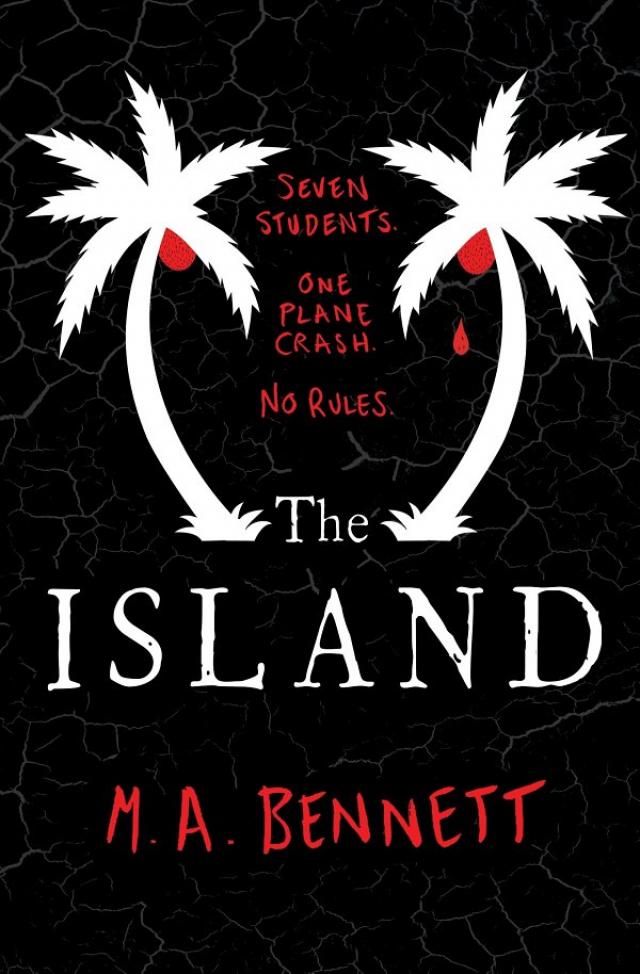
The Island, page 1


Contents
Title Page
ALSO BY M. A. BENNETT
Dedication
Epigraph
The People on the Island
Disc One
Prologue
Disc Two
Chapter 1: Desert Island Discs
Chapter 2: The Games Nazi
Chapter 3: The Sockdologiser
Chapter 4: The Nowhere Man
Chapter 5: The Boy Island
Chapter 6: Why I Didn’t Exactly Weep When I Thought All My Classmates Were Dead
Chapter 7: Blucozade
Chapter 8: The Reestablishment of Slavery
Chapter 9: Toppers
Chapter 10: The Camel’s Back
Chapter 11: The First Punch and the Last Straw
Chapter 12: The Deal
Disc Three
Chapter 13: Monarch of All He Surveys
Chapter 14: The Possibility of a Polar Bear
Chapter 15: The Breakfast Club
Chapter 16: The Plane, the Plane
Chapter 17: Orange Is the New Black
Disc Four
Chapter 18: Catching Fire
Chapter 19: Hunters and Gatherers
Chapter 20: Gutted
Disc Five
Chapter 21: Night on Bare Mountain
Chapter 22: Monte Cristo
Chapter 23: S.O.S.
Chapter 24: Bikini Bottom
Chapter 25: The Loam Mutiny
Chapter 26: Plenty of Fish
Chapter 27: The Hand of the King
Chapter 28: Ship’s Doctor
Chapter 29: 23b
Chapter 30: Those Who Mourn
Chapter 31: The Green Gonads
Disc Six
Chapter 32: The Amazing Skirt
Chapter 33: The Amazing Skirt (II)
Chapter 34: The Amazing Skirt (III) … Nearly
Chapter 35: Love Island
Chapter 36: The Complete Works
Chapter 37: Versailles
Chapter 38: Chivalry Lives
Chapter 39: Swimming to Nowhere
Chapter 40: An End to Dickishness
Chapter 41: The View From the Middle of Nowhere
Chapter 42: X Marks the Spot
Chapter 43: Numbers and Letters
Chapter 44: The Mission
Chapter 45: The Code
Chapter 46: The Bunker
Disc Seven
Chapter 47: Debrief
Chapter 48: Wrong Number
Chapter 49: The Other Island
Disc Eight
Epilogue
Everyone’s Desert Island Discs
Acknowledgements
M. A. Bennett
Also From M.A. Bennett
Copyright
ALSO BY M. A. BENNETT
S.T.A.G.S.
To Sacha, who used to be a Nowhere Man and is now a Somewhere Man
‘No man is an island entire of itself …’
John Donne
The People on the Island
Lincoln Selkirk: A Nerd
Flora Altounyan: An Emo
Sebastian Loam: A Jock
Miranda Pencroft: A Gorgeous Girl
Ralph Turk: A Delinquent
Jun Am Li: A High Achiever
Gilbert Egan: A Dork
Prologue
The first thing I remember about the island is opening my eyes and seeing nothing but sand, up really close like it was under a microscope. It sounds stupid but I didn’t realise until that moment that sand up close just looks like a bunch of tiny rocks all stacked together like that crumbly brown sugar you have in England. My head, on the side that I was lying, felt as though it had been squished flat, like my skull had morphed from an English football shape to an American football shape.
I blinked and tried to focus. Something was rushing towards my face. It was warm salt water. It splashed into my mouth, making me gag, then rushed away again as quickly as it had come. Then a few seconds later it was back, and this time it brought something with it. I put out a hand that didn’t seem to belong to me and caught at the spidery black shape, bringing it closer to my face. It was my £4 pair of glasses from Tiger, still intact.
I sat up, and my head throbbed once, hard. I washed my glasses in the sea and out of habit I put them on, the water from the lenses falling down my face like tears. It was so hot the tears dried almost at once. I wiggled my jaw. It hurt. Then I explored the teeth on the right side of my face with my tongue. They felt a bit wobbly, but there were no gaps, just the sharp edge of the tooth that had been cracked where I’d been punched in games. My mom had been hounding me to get it fixed for weeks, but I hadn’t gotten around to it. I guess now it would have to wait a helluva lot longer.
I looked down at the rest of me. I didn’t seem to have any injuries. My skinny white arms were all right, and my skinny white legs seemed OK too. I had no mirror so I couldn’t check my football head, but I looked down my shirt and my torso seemed good too – its usual puny, concave self, with about as many hairs as Homer Simpson’s head – pathetic for a sixteen-year-old, but good. The white shirt and khaki shorts that I’d worn on the plane were a bit scrubbed and ripped, and somehow I’d managed to lose my sneakers – my long white feet were bare. But all things considered I was in pretty good shape for someone who’d just fallen from the sky.
I looked around me. I was on a classic, SpongeBob SquarePants island, with palm trees, and green sea, and blue sky. A golden sun was burning down from overhead – I’d never been so hot in my life, not even back in Palo Alto. I could hear my own breathing inside of my head, and outside of my head I could hear the sound of the tide washing in and out. The island was breathing too.
There was a sudden, delicious breeze and another sound was added to the mix: this sort of whispering of the wind in the palm trees. The big glossy leaves were wagging about, above these huge green coconuts dangling in pairs below them. Inland beyond the palm trees was a jungly wilderness, and a high green hill. Of course, I didn’t know right then that I was on an island, but it sure as hell looked like one. Behind me there was a long scar in the sand as if I’d been pushed or dragged along the beach as I’d landed. Far along the beach were scattered white somethings, which I figured must be bits of the light aircraft my class and I had taken off in.
I got up from the beach slowly, spitting sand, my legs wobbling like a new foal’s. My eyes, nose and mouth were full of sand. I blinked and hawked and spat. The right side of my head, the squashed side, hurt like hell. But I didn’t care. I turned around on the beach, three-sixty degrees, and peered as far as I could to the horizon. There was not a soul to be seen. Just me.
I should’ve been frightened at that point. But I wasn’t. No, sir. I did a little victory dance, flapping my hands at the sky like those tube dudes you see at gas stations, the ones with the air blowing through them. With my sandy throat I sang a few shaky bars of ‘Ode to Joy’. The fact that it was the tune to our school song couldn’t ruin it for me any more.
My classmates were dead. All dead. And that was a cause for celebration.
My mom had been right.
The geek had inherited the earth.
THREE YEARS EARLIER
1
Desert Island Discs
My kind – the lesser spotted geek – have our stereotypes to conform to. We like words (I can quote Star Wars verbatim). We like numbers (I can quote Pi to hundreds of places). And we are as happy as a pig in shit when words and numbers intersect (I like that there are 39 Steps, or 101 Dalmatians, or that the Count of Monte Cristo was known as Prisoner 34.) We like computers. We like Marvel and DC. We can build stuff, but we can’t talk to people. We can make anything you like except friends. We like girls but we can’t get ’em. And what we don’t do, what we absolutely don’t do, is Sports. Or as my new school called them, Games.
Games to me were always video games. Video games would’ve been OK. Like most of my kind I’m a pretty serious gamer. (Fortnite. Uncharted IV. Link’s Awakening. And my old-school favourite, Myst.) Sure, some of them can get pretty violent. But it’s all virtual, so it’s all harmless.
What happened at my school were not games.
They were serious.
I’d managed to avoid games lessons until I was thirteen for the very good reason that I’d avoided school itself. Ever since we’d moved to England when I was just a little kid, I’d been home-schooled and I loved it. I was born on the West Coast of America. My parents were academics who taught in this hippy college where people wore tie-dye and sandals and collected crystals. Then the academic parents both got research posts at Oxford University in England, and we moved to Oxford.
We’d all had to make an adjustment moving to England. My folks look like they walked straight out of the seventies without getting changed. My dad has big hair and a beard, and aviator glasses, and wears nylon shirts that crackle when you hug him. My mom has waist-length hair, and wears floor-length skirts. At the University of Palo Alto (their old university) they were known as Paul and Marilyn, even by their students. I don’t think I ever saw either of them wearing any shoes other than sandals. At Oxford they were known as Professor P. Selkirk and Professor M. Selkirk and they had to wear actual shoes. But they didn’t seem to care. They loved all the history and old colleges and stuff, and they were working on this ground-breaking new Behavioural Science project that got them really pumped. And as for me, they thought the transition from my West Coast American freewheeling elementary school which basically taught finger-painting and not much else, to a bu
Because I was home-schooled I didn’t really know any other kids until I was thirteen. Sure, I went to the birthday parties of the kids of my parents’ colleagues, but I made no lasting friendships. For one thing, academia is this kinda transitory life and people are always buzzing around the world taking up different fellowships and the Chair of This or the Reader of That. So the kids I got to know were only in Oxford for, like, two seconds. For another, I felt like I didn’t need anybody but my folks. I had a great time being taught by them. They were attached to a box-fresh, modern faculty called the Institute of Behavioural Science, and also to this incredibly old, incredibly beautiful college called Trinity. But there was always someone at home, and that someone would teach me.
They taught me science – of course – and math and English, and even some Latin because it was, said my dad, the language of science. They taught me politics, which I was always interested in from Day One, because of my name. I’d known all my life that I was named after President Lincoln but weirdly it wasn’t till we’d moved to England that I asked my parents why him.
‘He’s my favourite president,’ Mom had said.
‘And sometimes if you’re named after someone you emulate them,’ added Dad. They often talked in turn like that – they were a real double act, not just at work but at home too. ‘It’s called nominative determinism.’ My parents never dumbed things down, even when I was little. They just expected me to keep up.
I said: ‘You mean you want me to be shot in a theatre at the age of fifty-four?’
They laughed at that. ‘No, silly,’ said my mom. ‘I was thinking more of how he lived, not how he died. He was an ethical leader, with a strong moral compass. He abolished slavery, you know.’
I did know. ‘I think the slavery thing has been done, Mom. I can’t exactly abolish it again.’
‘There are still slaves in some places, son,’ said my dad. ‘And what your mom means is that you could be president one day.’
‘But we live in England now.’
‘Doesn’t matter,’ said Dad. ‘Lots of presidents came to Oxford. John Quincy Adams. JFK. Bill Clinton. The only thing that matters, Link, is that you were born in America. You’re welcome by the way.’
My parents always called me Link. Nothing to do with Zelda, if that’s what you’re thinking. For the longest time I thought it was short for Lincoln but dad said no, it was because they could never find me at mealtimes because I was always playing those games, or finding the prime numbers on a chessboard, or building a model airplane or something. There was always this empty chair at the dinner table, so one of them would sigh, throw down their napkin and come and find me. And that’s why they called me ‘the Missing Link’. It always cracked them up but it took me years to get the joke.
That was the great thing about being home-schooled. There was no structure. If I was inventing something in the garden they’d just leave me to it, until it was too dark for me to see what I was doing. Or if I was really into a book I was reading they’d just let me finish it, until hunger pangs clawed at my stomach and pulled me out of the story. Then there would be great days when we were all at home and my mom and dad would just decide at breakfast that we’d ditch schoolwork for the whole day and go off on some trip. These trips were always educational but they sure were fun for a nerd like me. We’d go off to London on the train and spend the days in the brown and dust-smelling Natural History Museum, dwarfed by dinosaur skeletons, or go to Stratford-upon-Avon and feed the swans and then go see a play at the Royal Shakespeare Theatre. In fact, thinking about it, my parents sure took me to a lot of plays considering I was named after a president who was shot in a theatre, even plays that were too old for me. I can still remember the first play I ever went to in England. I must’ve only been around eight. It was about this butler, who is a total slave to this hoity-toity upper-class English family, and him and the family get marooned on a desert island, and on the island everything flips and he is the boss, and they are his slaves. My parents sold it to me by saying it was by the same guy who wrote Peter Pan. I was much too young to really get it, but I was Hooked. No pun intended.
After our happy days of lessons or trips, there would be happy evenings at home. We lived in a red-brick, Victorian house in a pretty nice neighbourhood in Oxford which was, for reasons no one ever explained to me, called Jericho. We’d sit around the table in our warm kitchen after dinner, listening to the washing machine coming into land, and the same show playing on the radio. My parents’ favourite thing about England was the BBC, and their favourite thing about the BBC was BBC Radio 4, and their favourite thing about Radio 4 was Desert Island Discs. It’s presented by this chick with a really soft (Scottish?) voice, and what she does is she gets all these famous people to choose their eight favourite pieces of music, and she asks them why they’ve chosen them, and then she plays them on the show. I don’t mean shitty celebrities like the Kardashians, I mean like really amazing actors and scientists and politicians and stuff. The subjects also get to choose one book. You already get given the Bible and The Complete Works of Shakespeare, so there’s no point wasting your book choice on those. Finally you get one luxury like a piano or a hot tub or something. It sounds like a crazy show but it is kinda cool. Apparently it’s been running for like a million years and it’s had awesome people on it like Stephen Hawking. (They even April-Fooled everyone in 1963 by doing a whole show on this guy who was totally fake. They made up this dude called Sir Harry Whitlohn, who was supposed to be a mountaineer, and they had him voiced by an actor who bragged about his expeditions and chose all his music and everything. Everyone totally bought it.) The idea of the show is that the music choices of the person tell you more about what the person is really like than the interview bits they do in between the tracks. I really liked it because I’ve never felt like a child of my time musically. For me all the latest music is totally linked with social media (ya know, people like old Taylor Swift hawking her wares on Instagram) and social media means fear for me for reasons which will become clear later. But Desert Island Discs introduced me to old music, the kind of music my parents liked. The kind of music that was actually a disc, made of vinyl, and not a download, or a stream, or an mp-whatever. That kind was safe. And I dug it.
So I had all kinds of lessons, and in the evenings I’d listen to Desert Island Discs, or be in my bedroom gaming, but one thing I never, ever had to do was play actual games. No Phys Ed. No sports. Not so much as a star jump. And then I turned thirteen and all that changed when it was decided that I had to go to school, because that’s when the rest of the kids in England would be choosing their options for GCSEs and starting the two-year courses that led up to the exams. I was outpacing my parents in some subjects, not science (of course) but other things. My folks didn’t exactly press me to their bosoms and say My boy, you are a genius. We can teach you nothing more. But that’s kinda what they meant. I needed subject teachers, teachers who were experts in their field. I needed to follow the curriculum, and have a more serious education than just a few hours here and there. And, most of all, according to my folks, I needed to be ‘socialised’. My parents use lots of Behavioural Science jargon, and what they meant by that was that I needed to know other kids. ‘You’re an only child, honey,’ my mom would say. ‘Heck, we’d keep you with us forever if we could, just the three of us. But you need to mix with kids your own age.’ Then my dad said something that would keep coming back to me. ‘No man is an island.’