The War in the Air

The War in the Air

H. G. Wells

Literature & Fiction / Science Fiction & Fantasy / History

The first three chapters of The War in the Air relate details of the life of Bert Smallways and his extended family in Bun Hill – a (fictional) former Kentish village which had become a London suburb within living memory (in many ways similar to Bromley where Wells was born). The story begins with Bert\'s brother Tom, a stolid greengrocer who views technological progress with suspicion and apprehension (which would turn out to be all too well founded) and their aged father, who recalls with longing the time when Bun Hill was a quiet village and he had driven the local squire\'s carriage. However, the story soon focuses on Bert who is an unimpressive, not particularly gifted, unsuccessful young man with few ideas about larger things – but far from unintelligent. He has a strong attachment to a young woman named Edna, and works as a helper and later a partner in a bicycle shop. When bankruptcy threatens one summer, he and his partner abandon the shop, devise a singing act ("the Desert Dervishes"), and resolve to try their fortunes in English sea resorts. As chance would have, their initial performance is interrupted by a balloon which lands on the beach before them, and which turns out to contain one Mr. Butteridge. Butteridge is famous for his successful invention of an easily manoeuvrable fixed-wing aircraft whose secret he has not revealed and that he is seeking to sell to the British government or, failing that, to Germany. Prior to Butteridge, nobody had succeeded in producing a practical heavier-than-air machine, only a few awkward devices of limited utility such as the German "Drachenflieger", which had to be towed aloft and released from an airship. Butteridge\'s invention is a major breakthrough, as it is highly manoeuvrable, capable of both very fast and very slow flight, and requires only a small area to take off and land, reminiscent of the later autogyro. By accident Bert is carried off in Butteridge\'s balloon, and discovers Butteridge\'s secret plans on board it. Bert is clever enough to appraise his situation, and when the balloon is shot down in a secret German "aeronautic park east of Hamburg," Bert intends to pass himself off as Butteridge to sell the secret. However, he has stumbled upon the German air fleet just as it is about to launch a surprise attack on the United States - and Prince Karl Albert, the author and leader of this plan, decides to take him along for the campaign. The Prince, world-famous as "The German Alexander" or Napoleon, is a living manifestation of German Nationalism and boundless imperial ambitions, his personality as depicted by Wells in some ways resembling that of Kaiser Wilhelm II. Bert\'s disguise is soon seen through by the Germans, and – narrowly avoiding being summarily thrown overboard by the furious Prince – he is relegated to the role of a witness to the true horror of war.
Read online
  • 178
The Chronic Argonauts

The Chronic Argonauts

H. G. Wells

Literature & Fiction / Science Fiction & Fantasy / History

This brief story begins with a third-person account of the arrival of a mysterious inventor to the peaceful Welsh town of Llyddwdd. Dr. Nebogipfel takes up residence in a house sorely neglected after the deaths of its former inhabitants. The main bulk of the story concerns the apprehension of the simple rural folk who eventually storm the inventor's "devilish" workshop in an effort to repay supposed witchery. Nebogipfel escapes with one other person—the sympathetic Reverend Elijah Ulysses Cook—in what is later revealed to be a time machine.
Read online
  • 159
The Country of the Blind and Other Stories

The Country of the Blind and Other Stories

H. G. Wells

Literature & Fiction / Science Fiction & Fantasy / History

The final installment in Penguin Classics's landmark H. G. Wells seriesAlthough best known for his novels, it was in his early short fiction that H. G. Wells first explored the relationship between the fantastical and everyday. Here horror meets humor, man-eating squids invade the sleepy Devon coast, and strange kinks and portals in space and time lead to other worlds-a marvelous literary universe showcasing the author's fascination with the wonders and perils of scientific progress.
Read online
  • 147
Kipps

Kipps

H. G. Wells

Literature & Fiction / Science Fiction & Fantasy / History

Orphaned at an early age, Artie Kipps is stunned to discover upon reading a newspaper that he is the grandson of a wealthy gentleman—and the inheritor of his fortune. Thrown dramatically into the upper classes, he struggles to learn the etiquette and rules of polite society. But, as he soon discovers, becoming a "true gentleman" is neither as easy nor as desirable as it first appears. Kipps is a hilarious tale of one man's struggle for selfimprovement and a witty satire of pretension.
Read online
  • 87
Ann Veronica

Ann Veronica

H. G. Wells

Literature & Fiction / Science Fiction & Fantasy / History

An introduction by the author of The Duchess explores why Wells's classic tale of one woman's fight against the stifling conventions of Edwardian England is as relevant today as in 1909Stong-willed, reckless, and fiercely independent, Ann Veronica Stanley is determined to be a "Person," to work, love, and, above all, to live. Walking away from her stifling father and the social conventions of her time, she leaves drab suburbia for Edwardian London and encounters an unknown world of suffragettes, Fabians, and free love. But it is only when she meets the charismatic Capes that she truly confronts the meaning of her new found freedom. Exploring the conflict between female empowerment and the sacrifices people make for love, this novel caused a sensation—damned in the press and preached against from the pulpits—when it was first published in 1909, due to Wells' groundbreaking treatment of female sexuality.About the AuthorH. G. Wells (1866–1946) is regarded as one of the all-time greatest authors of science fiction. Flora Fraser is the author of such historical biographies as Pauline Bonaparte, Princesses: The Six Daughters of George III, and The Unruly Queen: The Life of Queen Caroline.
Read online
  • 69
The Country of the Blind and other Selected Stories

The Country of the Blind and other Selected Stories

H. G. Wells

Literature & Fiction / Science Fiction & Fantasy / History

Herbert George Wells was perhaps best known as the author of such classic works of science fiction as The Time Machine and War of the Worlds. But it was in his short stories, written when he was a young man embarking on a literary career, that he first explored the enormous potential of the scientific discoveries of the day. He described his stories as "a miscellany of inventions," yet his enthusiasm for science was tempered by an awareness of its horrifying destructive powers and the threat it could pose to the human race. A consummate storyteller, he made fantastic creatures and machines entirely believable; and, by placing ordinary men and women in extraordinary situations, he explored, with humor, what it means to be alive in a century of rapid scientific progress.
Read online
  • 68
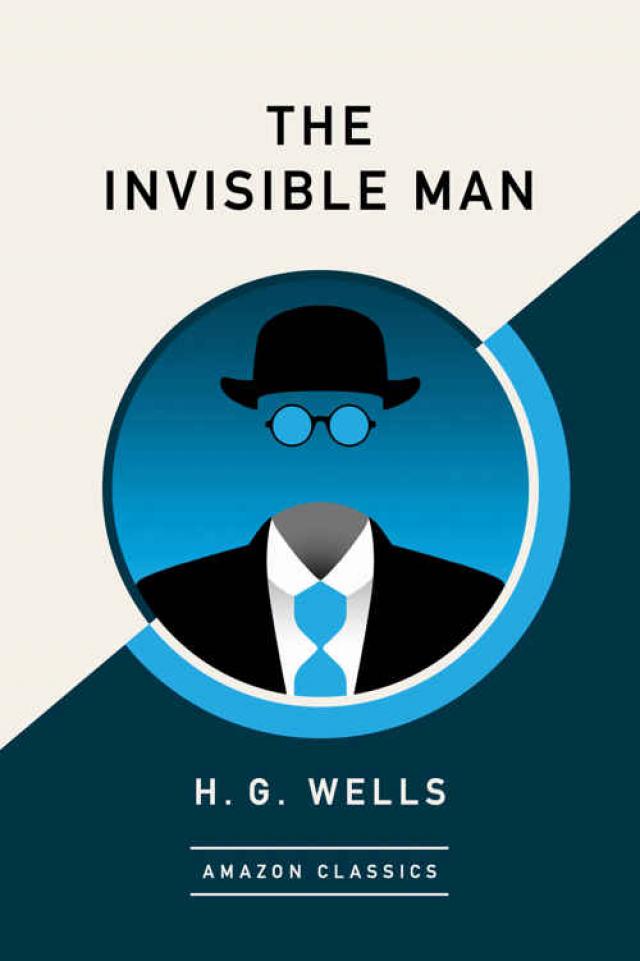
The Invisible Man

The Invisible Man

H. G. Wells

Literature & Fiction / Science Fiction & Fantasy / History

Having devoted his studies to optics and refraction, an impulsive scientist named Griffin has rendered himself invisible. Unable to reverse the effects, his struggle to survive grows desperate until he realizes that there are benefits to living out of the public eye. Increasingly isolated, he soon spirals into a life of crime and degenerates into madness. He can’t see that he has become his own worst enemy.Exploring the loss of identity and the willful disappearance of conscience and morality, H. G. Wells crafted one of his most suspenseful and cautionary tales, which continues to intrigue to this day.AmazonClassics brings you timeless works from the masters of storytelling. Ideal for anyone who wants to read a great work for the first time or rediscover an old favorite, these new editions open the door to literature’s most unforgettable characters and beloved worlds.Revised edition: Previously published as The Invisible Man, this edition of The Invisible Man (AmazonClassics Edition) includes editorial revisions.**
Read online
  • 63
A Short History of the World

A Short History of the World

H. G. Wells

Literature & Fiction / Science Fiction & Fantasy / History

Spanning the origins of the Earth to the outcome of the First World War, this is a brilliantly compelling account of the evolution of life and the development of the human race. Along the way, Wells considers such diverse subjects as the Neolithic era, the rise of Judaism, the Golden Age of Athens, the life of Christ, the rise of Islam, the discovery of America and the Industrial Revolution. Breathtaking in its scope and passionate in its intensity, this history remains one of the most readable of its kind.
Read online
  • 62
The Time Machine and The War of the Worlds

The Time Machine and The War of the Worlds

H. G. Wells

Literature & Fiction / Science Fiction & Fantasy / History

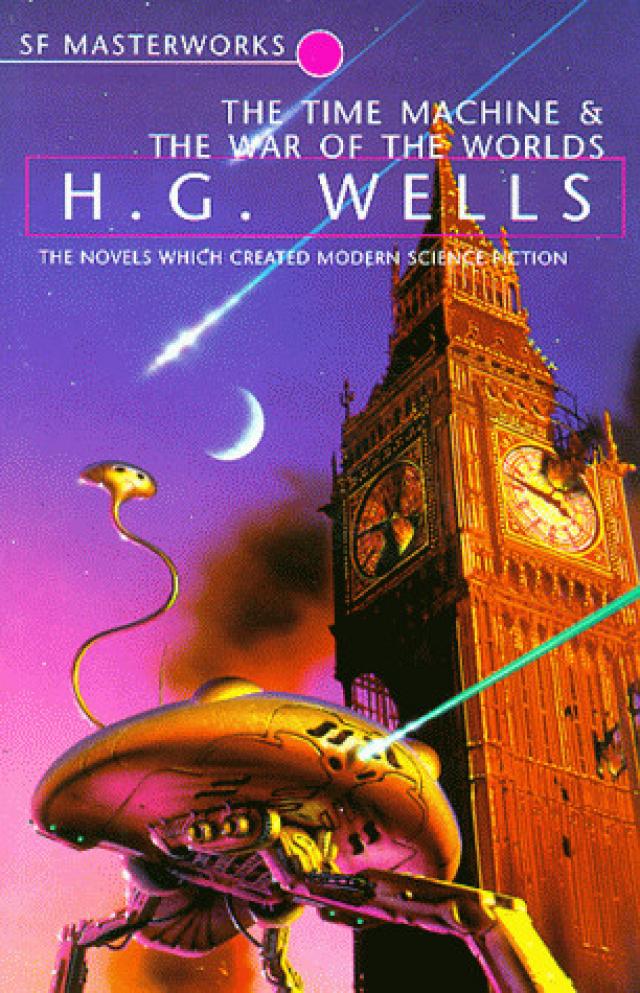
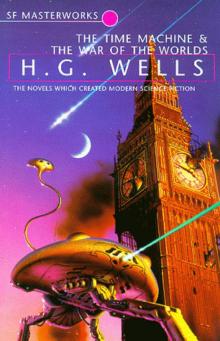
HG Wells virtually defined modern science fiction with the two tales featured in this double volume, a welcome addition to the SF Masterworks series. The Time Machine is the classic tale of a time traveller's journey to the world of 802,701 AD where humanity is divided between the bad and the beautiful, a simplistic vision at first glance but a prophetic take on a future that may not be so far removed from a reality yet to take hold, simply lurking in the shadows and waiting for the human race to bring it about by its own hand.Product DescriptionOn October 30, 1938, Orson Welles terrified American radio listeners by describing a Martian invasion of Earth in a broadcast that became legendary. Forty years earlier, H. G. Wells had first penned the story: The War of the Worlds, a science-fiction classic that endures in our collective subconscious.Deeply concerned with the welfare of contemporary society, Wells wrote his novel of interplanetary conflict in anticipation of war in Europe, and in it he predicted the technological savagery of twentieth century warfare. Playing expertly on worldwide security fears, The War of the Worlds grips readers with its conviction that invasion can happen anytime, anywhere—even in our own backyard. Introduction to War of the WorldsThe Martians also reflect Wells himself. Just as the bicycle liberated Wells from the limitations of a weak body, the machines used by the Martians, who are weighed down because the pull of gravity is stronger on Earth than it is on Mars, enable them to move swiftly and attack without warning. The machine is an extension of a body, a kind of prosthetic device that supplies an ability the body lacks. The Martian sitting on top of a huge, three-legged fighting machine striding across Surrey toward London resembles nothing so much as Wells piloting his bicycle around the countryside. And the Martians, like Wells, tend to work alone. That is, while they are involved in a collective activity—the invasion and conquest of England, which is, by extension, the world—they work alone in their fighting machines or their aluminum manufacturing devices. Except for their time in the space capsule, they are rarely together. Wells's first problem was to decide how to tell such a tale. He could use an external, omniscient narrator, but that would cut down on the immediacy of the action and make it seem much more like history. A single first-person narrator would be possible, but that person would have to travel long distances at almost superhuman speed in order to see everything involved in the Martian invasion. Wells opts for a device Robert Louis Stevenson (1850-1894) uses in Treasure Island (1883), having a first-person narrative become two first-person narratives by introducing a second character who tells us about what happened elsewhere. This is, admittedly, an awkward device because the two characters—brothers in The War of the Worlds—are not in communication with each other. Their separate stories become a single story because the primary narrator takes control of his brother's tale, treating him in the same way an omniscient narrator would treat a character. The primary narrator, then, is both witness and author, a modification of the narrator of The Time Machine, who transcribes the story of the Time Traveller. The personality of this narrator is a vexing matter, and it is here Wells departs from traditional novelistic practice. Wells clearly had many options in this situation: He could make his nondescript, suburban science writer into a hero by having him either subdue the Martians or lay the foundations for an organized defense. That solution does not suit Wells's hidden intention, which is to warn those people capable of understanding that their world is rotten and will fall at the first blow from an outside force. Wells does what in both human and novelistic terms makes the most sense: He makes his narrator a man of science, but a conventional thinker and not a man in the line of the Time Traveller. He is not a leader, not a warrior, but a man imbued with curiosity. He wants to understand the Martians, wants to observe their machines, and wants to survive to tell the tale. His psychological depth is slight: He loves his wife, detests the mad clergyman who almost manages to deliver him to the Martians, feels guilt about being responsible for the man's death, and has a nervous breakdown after learning that the Martians all die because of Earth's bacteria. The second central figure, the narrator's brother, is no more developed than the narrator. He is a "medical student, working for an imminent examination", but that is all we know of him. When, in the final chapter of book one, Wells feels he no longer needs the brother, he simply has him board a ship, witness a navy vessel ram two Martian fighting machines, and sail to Europe. We then return to the adventures of our primary narrator. This sacrifice of character depth to action explains the success of The War of the Worlds. If Wells had transformed his narrator into a preachy precursor of his New Republicans, the reader would probably begin to cheer for the Martians. Instead, he uses both brothers as innocent points of view, reporters telling us what they saw. That they have emotions is merely incidental to their role as informants. Wells relegates his ideas to the minor characters, carefully linking them to human imperfections so that the novel does not degenerate into sermon or essay. Probably the most interesting example of this is the artilleryman. In book one, chapter 11, the narrator, hiding inside his Woking house, sees a man trying to escape the Martians. He invites the man in and learns he is a soldier, "a driver in the artillery" whose unit has been wiped out by the Martians. The two separate in chapter 12, and we think we've seen the last of the artilleryman until suddenly in book two, chapter 7, he reappears, and now it is he who extends hospitality to the narrator.
Read online
  • 56
The Island of Dr. Moreau

The Island of Dr. Moreau

H. G. Wells

Literature & Fiction / Science Fiction & Fantasy / History

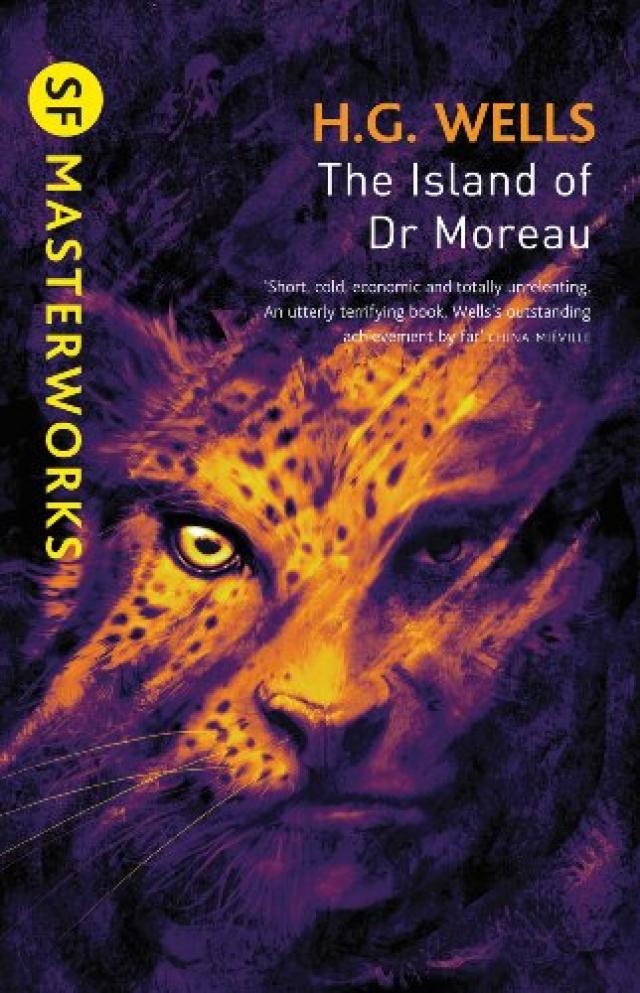
H.G. Wells's science fiction classic, The Island of Doctor Moreau, asks the reader to consider the limits of natural science and the distinction between men and beasts. A strange mix of science fiction, romance, and philosophical meandering, it is one of the standards of early science fiction.It begins with the protagonist, an upper class gentleman named Prendick, finding himself shipwrecked in the ocean. A passing ship takes him aboard, and a doctor named Montgomery revives him. He explains to Prendick that they are bound for an unnamed island where he works, and that the animals aboard the ship are traveling with him. Prendick also meets a grotesque, bestial native named M'ling who appears to be Montgomery's manservant.When they arrive on the island, however, both the captain of the ship and Doctor Moreau refuse to take Prendick. The crew pushes him back into the lifeboat from which they rescued him, but seeing that the ship really intends to abandom him, the islanders take pity and end up coming back for him. Montgomery introduces him to Doctor Moreau, a cold and precise man who conducts research on the island. After unloading the animals from the boat, they decide to house Prendick in an outer room of the enclosure in which they live. Prendick is exceedingly curious about what exactly Moreau researches on the island, especially after he locks the inner part of the enclosure without explaining why. Prendick suddenly remembers that he has heard of Moreau, and that he had been an eminent physiologist in London before a journalist exposed his gruesome experiments in vivisection.
Read online
  • 50
183